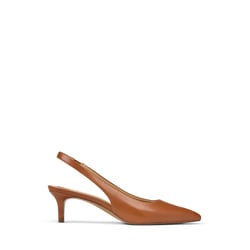
A secure strap, a steadier heel
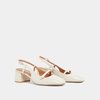
A slingback should stay comfortably behind your heel as you walk, without needing a quick adjustment every few steps. Add a block heel, and you have a shoe worth considering for office days, lunches out and journeys that involve more than a short walk from the car. The combination gives you the closed-toe coverage of a court shoe with an open back, while a broader heel base can feel steadier than a narrow one on firm, level ground.
The details decide how well that combination works for you: where the strap sits, how much room your toes have and whether the heel height suits your walking routine. At La Redoute, we suggest checking those practical points before choosing a colour or decorative detail. A bow might catch your eye, but a secure fit is what lets you walk from the station to your morning meeting without stopping to reposition your shoes.
Start with the fit from toe to heel
Check the length without relying on the strap
Try slingback block heels in your usual size first, using the product’s size guide where available. Your foot should sit within the footbed, with no overhang at the back and no pressure against the front. The strap should hold an already well-fitting shoe in place; it should not pull your foot backwards to compensate for insufficient length.
With pointed-toe shoes, the tapered tip is not intended to be filled by your toes. Focus instead on whether the widest part of your foot sits comfortably within the widest part of the shoe. Your toes should lie flat, without being squeezed together. If you feel pressure across the little toe before you have even walked around the room, a different width or toe shape is a more useful solution than hoping the upper will stretch.
Try both shoes and walk on a clean indoor surface. Feet can differ slightly in size, so check the fit on each side. If you plan to wear your slingbacks with tights, include those in the fitting rather than testing barefoot and discovering later that your foot slides forwards.
Give width as much attention as size
A wide foot does not necessarily need a longer shoe. Sizing up solely to gain space across the forefoot can leave extra length, making the slingback strap more likely to slip. Look for a wide-fit option where available, or try a rounder or almond-shaped toe if a sharply pointed design feels restrictive.
The upper should hold your forefoot without cutting into it. Stand with your weight evenly distributed, then take several steps and turn around. If the edges press into your foot when you turn, or your forefoot spills over the sole, the shape may not suit you. For a day involving a commute followed by several hours at your desk, that small pressure point can become increasingly distracting.
Get the slingback strap sitting securely
Find a snug position without overtightening
The back strap should rest securely against your heel rather than digging into the soft area above it. Its exact position depends on the shoe’s design and your heel shape, but it should stay in place during ordinary walking. A secure strap should not need constant readjustment. If it slips down repeatedly, check the shoe’s length, the available adjustment and how far your foot moves forwards.
An adjustable buckle gives you scope to refine the fit, particularly if one foot is slightly larger than the other. An elasticated section can allow some movement, but it cannot correct a shoe that is too long or too wide. Tightening the strap until it leaves a deep mark is not a useful fix: you may simply exchange slipping for rubbing.
- Fasten the strap while seated, then stand to check how it feels under your full weight.
- Walk forwards, turn and take a few shorter steps to see whether the strap stays put.
- Check for pressure at the buckle and along the edges of the strap.
- Notice whether your foot slides towards the toe, leaving a gap behind your heel.
- Repeat the test with the hosiery you expect to wear most often.
When browsing court shoes with strap details, check the fastening position as well as the appearance. A small buckle may look discreet, but you still need to be able to reach it and adjust it comfortably before leaving home.
Separate minor adjustments from a poor fit
A suitable forefoot cushion may help with slight movement, provided it does not make the toe area cramped. However, accessories should not compensate for a fundamentally poor fit. If your heel lifts away from the footbed with every step or the strap repeatedly falls off, try another size or shape instead.
Test new shoes indoors before committing to a full day out, following the retailer’s returns conditions. A short fitting can reveal an immediate pinch; a longer indoor walk can help you notice a strap that gradually moves down. Avoid assuming that uncomfortable slingbacks will become comfortable simply through wear, especially when the problem involves toe pressure or an unstable heel.
Choose heel support for the way you walk
Look beyond the width of the heel
A block heel generally offers a broader contact area than a slender heel, which can make it feel steadier on suitable surfaces. However, stability also depends on heel height, sole grip, fit and the surface beneath you. A wide heel will not prevent slipping on a wet floor, and a loose upper can allow your foot to move even when the heel itself feels solid.
Choose a heel height you can walk in without shortening every step. A low block heel may suit regular walking between public transport and the office. A higher version might work better for an occasion with limited walking and plenty of seated time. If you usually wear flat shoes or sandals, try a modest rise first rather than jumping straight to high heels for a long event.
A kitten heel describes a low heel height, often with a slender shape, so it does not necessarily offer the same base as a low block design. When comparing styles, look at the actual heel profile and product measurements rather than relying on the name alone.
Test balance before planning a long day
Stand naturally in the shoes, then walk at your normal pace. You should not feel pushed onto your toes or need to grip with them to keep the shoes on. Check whether the heel lands securely and whether the sole bends enough for a comfortable step. A stiff sole or poorly positioned strap can make walking awkward even when the heel is relatively low.
If you are comparing block heels with black stilettos for an event, think about the route as well as the outfit. A broad heel can be easier to manage across firm paving, but gaps between paving stones, gravel and uneven steps still need care. For a venue with a garden reception, check the ground conditions rather than assuming any heeled shoe will remain stable on soft grass.
Put court-shoe versatility to work
Plan for busy city commutes
Wear slingback block heels for city commutes when the fit is secure, the walking distance is manageable and the route suits the sole. A closed toe provides more coverage than open-toe sandals, while the open back can feel less enclosed during warmer journeys. On busy pavements, a lower heel can make it easier to maintain your usual pace without placing as much weight through the forefoot as a higher heel.
Keep a practical alternative available for long or wet journeys. If your route includes slippery station floors, steep steps or a lengthy walk, commuting in flat shoes and changing at the office may be the more comfortable choice. Slingbacks leave the heel exposed, so they are less suitable when rain and puddles are likely.
Pair them with office trousers
Pair slingback block heels with office trousers for desk-to-meeting days, choosing a heel height you have already tested. An ankle-length hem leaves the strap visible and avoids fabric catching under the heel. With longer trousers, check the hem while wearing the shoes: it should clear the floor rather than drag behind you.
For a wardrobe built around grey, cream and dark denim, navy block heel shoes offer an alternative to black without requiring a different outfit formula. Keep a spare pair of comfortable shoes at your desk if your working day sometimes expands into an unexpected walk between buildings. Even a well-fitting pair benefits from being chosen around the actual demands of your day.
Keep weekend plans walkable
Slingback block heels can also suit weekend brunches when you are walking between neighbourhood cafés. Choose a low or moderate heel and a toe shape that gives you enough space for the whole outing, not just the seated part. Straight-leg jeans with a cropped hem keep the back strap clear, while a knee-length skirt avoids any need to manage a trailing hem on steps.
If you want colour, blue block heels can work with white trousers and a striped shirt, or with dark jeans and a plain knit. A bow at the front adds a decorative detail without changing the basic outfit, but check that any embellishment does not rub against the opposite shoe as you walk. Let the planned distance guide the fit and heel height before choosing between colours.
Care for the upper, strap and heel
Match your cleaning routine to the material
Check the care guidance for the specific material before applying a product. Smooth leather, suede, patent finishes and synthetic uppers need different treatment. For smooth leather, remove surface dust with a soft cloth and use a suitable care product as directed. For suede, use an appropriate brush on dry shoes rather than rubbing them with a wet cloth. Test any cleaner on a discreet area first.
If your shoes become wet, blot away moisture and let them dry naturally away from radiators or direct heat. Lightly filling the toe with plain absorbent paper can help maintain its shape while it dries; replace the paper if it becomes damp. Do not pack the shoe tightly, as that can distort the upper.
Check small components before they cause problems
Inspect the strap, buckle and heel tips regularly, especially if you walk on hard pavements. A stretched buckle hole or loosening attachment can affect the secure fit you checked when the shoes were new. Worn heel tips may also change how evenly the heel meets the ground. A shoe repair professional can advise on replacement before wear reaches the heel itself.
Store slingbacks without folding the back straps beneath the soles, and keep embellished pairs from rubbing against neighbouring shoes. Before your next outing, check the fastening and take a few steps indoors. The aim is straightforward: enough toe room, a strap that stays in place and a heel that suits the distance ahead.