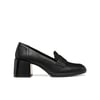
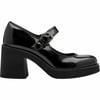
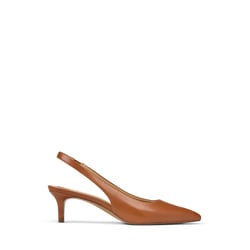
A steadier heel for everyday wear
From the walk to the station to an afternoon of meetings, block heel court shoes give you a broader base underfoot than a narrow heel. That extra contact area can make standing and walking feel steadier, although comfort still depends on the shoe’s fit, height and construction. A supportive heel cannot make up for cramped toes or a back that slips with every step. At La Redoute, we suggest starting with how your shoes feel during ordinary movements: walking, turning, climbing stairs and standing still.
For women moving between desk work, client presentations and dinner plans, the best choice is often a manageable heel height with enough room across the forefoot. This guide takes you through fit, block heel stability, materials and care, so you can judge a pair by what it needs to do throughout your day.
Start with court shoe fit, not the size label alone
A court shoe usually has a closed toe and a relatively open upper, so its shape needs to hold your foot without relying on laces. Your usual size is a starting point rather than a guarantee: toe shape, lining thickness and the cut around the foot can all affect the fit. Try both shoes on with the tights, socks or hosiery you expect to wear, ideally later in the day when your feet may be slightly fuller.
Give your toes space without losing heel grip
Your toes should rest naturally rather than curl or overlap. In a pointed court shoe, the decorative tip extends beyond the toes; you do not need to fill it. Pay closer attention to pressure across the ball of your foot and around your little toe. A secure fit should not require you to grip with your toes. If you find yourself doing this while walking, the shoe may be too loose at the back or unsuitable for your foot shape.
Check heel movement over several steps. A small amount of movement may occur as a new sole flexes, but repeated slipping can lead to rubbing. Sizing down is not always the answer, especially if the smaller pair squeezes the forefoot. A different cut or a wide fit may offer a more useful balance of toe room and rear-foot security.
Use a short indoor fitting routine
Before committing to a full working day, test your shoes indoors on a clean surface, following any return conditions. Stand as well as walk: pressure that seems minor while seated can become noticeable when your weight moves forwards.
- Walk at your normal pace and check whether either heel lifts repeatedly.
- Turn gently in both directions to notice sideways movement inside the shoe.
- Stand for a few minutes and check for pressure across the toes and ball of the foot.
- Use a stair with a handrail, if available, to assess flexibility and heel security.
- Remove the shoes and look for localised redness that matches a seam or tight edge.
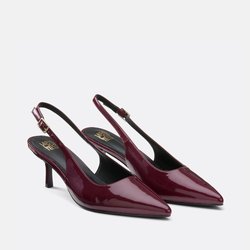
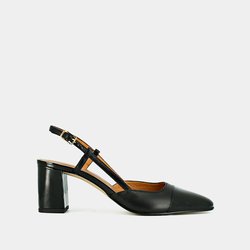
If you need more hold around the foot, court shoes with strap can be worth considering. An adjustable strap may reduce slipping, but it should sit comfortably without digging in when you bend your ankle. It will not correct a shoe that is too short or too narrow.
Understand what makes a block heel feel stable
A wider heel base spreads contact with the ground over a larger area than a slim heel tip. This can help during standing meetings or short walks between buildings. However, heel width is only one part of stability. The heel’s position beneath your foot, the firmness of the upper and the grip of the outsole also matter. A broad heel with a slippery sole can still feel uncertain on polished floors.
Match heel height to your daily route
A low heel generally places less of your weight towards the front of the shoe than a high heel. If your commute includes station stairs, long corridors and a walk from the bus stop, start with a lower style and assess it over a realistic distance. A mid-height option may work well for a day spent mostly seated, with shorter stretches of walking between meetings.
Block heels are not automatically suitable for every surface. Uneven paving, wet entrance tiles and loose gravel still call for care. Check the outsole for useful texture and avoid assuming that a chunky shape means a firm grip. If your route includes a long walk, carrying walking shoes and changing at the office may be more comfortable than asking one pair to cover every part of the journey.
Plan for standing as well as walking
At a weekday client presentation, you may spend twenty minutes standing beside a screen before walking around the room. Pair block heel court shoes with a dress that allows an easy stride, and test the complete outfit beforehand. A restrictive hem can shorten your steps even when your shoes fit well. For dinner outings, consider the walk from transport to the restaurant as well as the time spent seated.
If you usually wear black stilettos, a broader heel may feel more settled during standing conversations. The change is still worth testing gradually: a different heel shape can alter how you distribute your weight, even when the stated height is similar.
Choose materials for the way you wear your shoes
The upper, lining and sole each affect everyday wear comfort. Check product descriptions for material details rather than judging from a photograph alone. A soft-looking finish does not tell you whether the toe area has enough depth, and a padded footbed cannot remove pressure caused by a narrow shape.
Leather, patent finishes and interior details
Leather uppers may soften with wear, but do not rely on stretching to solve a painful fit. Slight initial firmness is different from pinching, numbness or pressure on a joint. Patent finishes can feel firmer around creases and edges, depending on their construction, so check how the shoe bends where your toes meet your foot.
Run a finger carefully around the inside to locate raised seams or rough edges. During a long office day, a small seam near the little toe can become more noticeable with repeated movement. Cushioning beneath the forefoot may soften contact with hard floors, while a smooth, well-finished lining can reduce irritation. Neither feature guarantees comfort, so use your indoor fitting routine to assess the whole shoe.
Make colour work with your weekday wardrobe
For an office wardrobe built around grey trousers, cream knitwear and dark dresses, navy block heel shoes provide a softer-looking alternative to black. Check the shade in daylight against the clothes you wear most often, particularly if you plan to combine several dark blues in one outfit.
Brighter blue block heels can add colour to a plain dress for a presentation without requiring additional accessories. Keep the practical checks unchanged: an appealing colour should not distract you from a tight toe box or slipping heel. Unlike open sandals, closed court styles also need enough depth above the toes to prevent rubbing against the upper.
Keep comfort consistent with a simple care routine
Daily wear puts pressure on heel tips, soles and the areas where the upper bends. Check heel tips before they wear unevenly, since a worn edge can affect how the shoe meets the floor. If a heel begins to wobble, makes an unfamiliar clicking sound or shows visible damage, stop wearing the pair and have it assessed by a shoe repairer.
Clean and dry according to the material
Wipe away surface dirt after your commute using a method suitable for the stated material. For smooth leather, follow the care instructions and use an appropriate product sparingly. Patent surfaces often need a soft, slightly damp cloth, followed by gentle drying, but check the manufacturer’s guidance first. Test any cleaner on an inconspicuous area before treating a visible section.
If your shoes become wet, let them dry naturally away from radiators and direct heat. Remove any detachable insoles if the care instructions allow it, and use plain paper inside to help retain the shape. Allow the interior to dry fully before wearing them again; damp linings can increase friction during the next commute.
Review the fit as the shoes settle
After several wears, notice whether the upper has softened and whether your heel remains secure. An insert can reduce internal space, so adding one to an already snug shoe may create pressure rather than relief. Persistent pain, tingling or numbness is a reason to stop wearing the pair, not a sign that you need a longer wearing-in period.
Whether you are comparing full-price styles or browsing a sale, use the same checks: toe room, heel grip, manageable height and suitable sole traction. Judge comfort by your actual routine, from the morning commute to the final walk home. A well-fitting pair should let you concentrate on your meeting or dinner conversation rather than on where your shoes are rubbing.