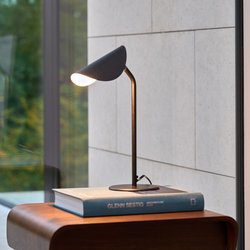
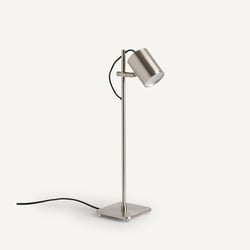
Find the best lamp for your workspace
A good desk lamp does far more than brighten a corner. It helps you read clearly, write comfortably, and work for longer without strain. If you are choosing a lamp for a home office, a study area, a bedroom table or a busy workbench, the right model should suit both your routine and your furniture. That is why the smartest way to shop is to look beyond colour and style first, and think about how the lamp will actually be used every day.
When you compare desk lamps, start with the basics: how much focused light you need, how much room you have on the desk, whether you want an adjustable arm or head, and which bulb type fits your habits. A lamp used for lighting homework notes during study sessions will not have exactly the same needs as one used for reading novels with a bedside desk lamp after midnight. One needs clear task lighting over books and paper; the other needs a gentler pool of light that does not flood the whole room.
At La Redoute, we know shoppers often want a lamp that works hard during the day and still looks right in the room after hours. That is why many people browse both table lamps and desk styles together, especially when they want one design to move easily between a study corner and a bedside table.
Why task lighting matters
The main role of a desk lamp is task lighting. In practical terms, that means directing light exactly where you need it rather than simply brightening the room. Ceiling lights can help with general lighting, but they often cast shadows over a notebook, keyboard or cutting mat, especially if you sit with your back to the main light source. A desk lamp solves that by bringing the light closer to the surface.
If you spend an hour reviewing bills, sketching, replying to emails or annotating printed pages, a focused beam reduces glare and helps you see detail. For example, when brightening a cluttered workbench with a focused desk lamp, a narrow, directed light makes tools, screws or sewing accessories easier to spot. Without that precision, small objects disappear into shadow, and your eyes work harder than they need to.
Look at where the light falls. A lamp with a shade that points downwards is often useful for concentrated tasks. A wider shade spreads light more broadly across a table, which can be helpful if you switch between a laptop, notebook and reference books. If you tend to work late, consider warm white light for a calmer feel in the evening, while cooler white lighting can feel sharper for daytime admin or revision sessions.
Choose the right size for your desk
Size is one of the most overlooked details when buying lamps. A large lamp can dominate a small desk, while a very compact design may not cast enough light across a wider surface. Before you choose, measure your table depth and width, and think about what already lives there: a monitor, trays, books, a keyboard, a plant or storage boxes.
On a narrow desk, a slim metal base or clamp-style lamp can free up valuable working room. On a broad table, you may prefer a lamp with a wider reach so the light lands in the middle of the workspace rather than only at the edge. If your desk sits in a bedroom, scale matters even more. A bedside setup often needs a smaller footprint so there is still room for a book, glasses and a glass of water.
For reading novels with a bedside desk lamp after midnight, a compact model with a controlled beam is often more practical than a bulky design. It gives you enough light for the page without making the whole room bright. If the lamp is too tall for the bedside table, the bulb may sit at eye level when you are lying down, which can feel harsh. In that case, a lower lamp with a tilting head is usually easier to live with.
- Small desk: look for a narrow base, clamp fitting or slim arm
- Medium desk: choose a balanced size with enough reach for writing and screen work
- Large table: consider a longer arm or broader shade for wider light coverage
- Bedside table: prioritise compact dimensions and easy switching on and off
Adjustability makes everyday use easier
One fixed position rarely suits every task. That is why adjustability is one of the most useful features in a desk lamp. If you switch between handwriting, laptop work, reading and hobbies, a lamp with a moving arm, rotating head or adjustable height gives you much more control.
An adjustable lamp can follow your routine. During study sessions, you might angle the light directly onto homework notes to avoid shadows from your writing hand. Later, you may turn the head upwards slightly to create softer background light while checking messages or tidying up. On a workbench, a pivoting arm helps you move the light around jars, boxes and stacked materials without having to move the whole base.
Think about how often you will reposition it. If you expect to move the lamp every day, choose a design that adjusts smoothly and holds its position well. A stiff hinge can be frustrating, while a loose arm may droop over time. For shared spaces, this matters even more. One person may need the light high above a laptop screen, while another wants it low over a notebook.
Styles in black or white are easy to place in many interiors, while brushed metal finishes can suit modern workspaces. If you want something softer for a bedroom table, a lamp with glass details or rounded lines can feel less technical while still giving you practical lighting.
Think about desk compatibility before you buy
A desk lamp should fit your furniture in more ways than one. The base needs to sit securely, the height needs to suit the chair and table, and the style should work with the room. A heavy lamp on a small side table may feel awkward, while a very light model on a busy family desk can be knocked easily.
Start with the surface. Is your desk wood, glass, painted metal or laminate? If you are using a glass table, check that the base is stable and not likely to slide. Felt pads or a wider base can help. If your desk is already full, a clamp lamp may be a better option than a standard table base. It leaves more room for paperwork and accessories.
Also consider cable placement. On a desk pushed against the wall, a rear cable exit can keep things tidy. On a bedside table in the centre of a room, a long visible cable may be less convenient. If you use several devices, think about whether the lamp sits near plugs, chargers and screens without causing clutter.
Many shoppers compare designs across collections such as table lamps & desk lamps am.pm or table lamps & desk lamps fifty five south because these ranges often include different proportions, finishes and lighting moods for different rooms. That makes it easier to match the lamp to the size of your desk rather than choosing by appearance alone.
Bulb compatibility and light source: what to check
Bulb type affects brightness, maintenance and the overall feel of the lamp. Many shoppers now look for LED options because they are practical for regular use and come in different tones of white light. If the lamp includes integrated LED lights, you will not need to buy a separate bulb, but you should still check the colour temperature and brightness.
If the lamp takes a replaceable bulb, check the fitting and maximum wattage. This gives you more flexibility if you want to change the light later. A warm bulb may suit bedside use, while a brighter cool white bulb often works well for task lighting at a desk. If you read printed documents, compare how the light looks on paper. A bulb that is too dim can make text tiring to read, while one that is too bright may bounce off glossy pages or screens.
Always match the light source to the task. For close work such as writing, paying bills or drawing, you need direct and steady light. For occasional use on a console or side table, decorative style may matter more than intensity. This is where the overlap between desk lamps and bedside lamps becomes useful: some compact designs can handle both, as long as the brightness and angle suit your evening routine.
Style, colours and materials
Once the practical details are sorted, you can think about the finish. A desk lamp often stays in view all day, so it should feel right in the room. Black lamps bring definition to pale desks and can tie in neatly with office accessories or monitor frames. White designs feel lighter visually and can blend into smaller rooms. If your space already has plenty of straight lines, a rounded shade or curved arm can soften the look.
Materials also change the character of the lamp. Metal is popular for desks because it feels clean and structured. Glass can add a lighter note, especially on a bedside table or in a multi-use room where you do not want the lighting to feel too office-like. Some shoppers prefer strong contrast, such as a black metal lamp on a pale oak table, while others choose softer colours that sit quietly in the background.
When comparing price, think about what you are getting: adjustability, bulb type, finish and footprint. The lowest sale price is not always the best option if the lamp does not reach the centre of your desk or if the base takes up too much room. A better approach is to weigh up cost against everyday usefulness.
How to compare your options with confidence
Online shopping gives you plenty of options, but a clear checklist helps narrow them down quickly. Product images can make lamps look larger or smaller than they really are, so dimensions matter just as much as style. Reading the product rating can also help you spot practical strengths, such as ease of assembly, useful reach or stable construction.
Use this buying checklist before you choose:
- Check the dimensions against your desk width and depth
- Look at the arm reach and head angle if you need adjustable use
- Confirm bulb compatibility or integrated LED details
- Think about where the switch sits for easy access
- Match the colour and material to your existing furniture
- Compare the price with the features you will actually use
For example, if you are lighting homework notes with an adjustable desk lamp during study sessions, a model with a flexible head and bright, steady light is likely to be more useful than a decorative lamp with limited movement. If you are brightening a cluttered workbench with a focused desk lamp, stability and directional lighting matter more than a broad ambient glow.
Finding the best desk lamp for your room
The best desk lamp is the one that suits your space, your tasks and your habits. A compact lamp can work brilliantly on a bedside table if you read late and want controlled light. A taller adjustable model may suit a home office where you alternate between keyboard work and handwritten notes. On a practical workbench, a robust metal design with a focused beam often makes daily tasks easier.
Our selection includes lamps for different room layouts, different table sizes and different lighting needs, so you can choose with real use in mind rather than guessing from appearance alone. Whether you are browsing crisp white finishes, bold black styles, glass details or clean-lined metal designs, the key is to match the lamp to how you live and work. When the size, light output and adjustability are right, your desk becomes easier to use from the first switch-on.