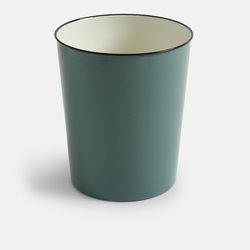
A waste paper bin that keeps paper tidy nearby
A waste paper bin beside your desk gives crumpled notes, unwanted envelopes and pencil shavings somewhere to go before they spread across your work surface. The right size keeps this everyday waste close at hand without taking up the floor space you need for your chair, feet or storage drawers. Start with what you throw away, how often you empty it and the space available: those three details will help you choose between a small basket and a larger household bin.
At La Redoute, we suggest comparing capacity, footprint, material and care together. A generous opening makes bulky paper easier to discard, but a wide rim may catch your chair as you move. A compact model can fit neatly beside a console, although it will need emptying more often if several people use it. Here is how to find a practical fit for your room and routine.
Match capacity to the paper you discard
Small bins for occasional notes and envelopes
For a bedside table, dressing area or lightly used desk, a bin of around 5 to 10 litres can be a useful starting point. This size suits modest amounts of dry waste, such as shopping lists, packaging slips and unwanted post. If you mainly discard flat sheets, you may not need much capacity. Crumpled sheets take up more space, so a small basket can fill quickly during a writing session.
Discard crumpled drafts in the waste paper bin beside your desk. If they reach the rim before your working day ends, either move up a size or plan to empty it during your afternoon break. Choose for your busiest ordinary day, rather than the occasional day when you clear a whole cupboard.
Medium and large capacities for shared spaces
A capacity of around 10 to 20 litres is worth considering for a regularly used home office, particularly if you open post, print documents or share the room. Larger bins can suit a family study or hobby area, but check whether the extra capacity comes from greater height or a wider base. A tall model may fit a narrow gap while still holding plenty; a broad one may be easier to reach but occupy more floor space.
At La Redoute, our selection includes the Bo Touch Bin, 30L by BRABANTIA, which combines a style-conscious design with 30 litres of capacity. That capacity is worth considering for a shared room with frequent paper waste, provided its external dimensions suit the available space. For a desk used only to check emails and open a few letters, a smaller option may be easier to position and empty.
Check the footprint before you choose
Measure the space at floor level and above
Capacity tells you how much a bin holds, not how much room it occupies. Check the external width, depth and height, including the rim, lid or handles where applicable. Measure the intended spot with your chair in its normal working position, then pull the chair out as you would when standing up. This helps you spot a clash that an empty room measurement would miss.
- Under a desk, leave enough room for your feet to move without knocking the bin.
- Beside a cabinet, check that drawers and doors can open fully.
- For a lidded model, allow clearance above it for the lid to open.
- In a narrow passage, keep the bin within the furniture line so it does not obstruct walking space.
- Check that you can lift the bin out to empty it without moving heavy furniture.
A round basket can work beside a desk leg or in an open corner, although it leaves unused gaps when pushed against two walls. A rectangular shape may use a narrow space beside a filing cabinet more efficiently. Compare the widest part of each design, not just its base, especially if the sides flare outwards.
Choose materials around everyday use and cleaning
Metal for a defined shape beside your desk
A metal waste paper bin is an option for a workspace where you want a clearly defined container for dry paper. Compare solid-sided and mesh designs before choosing. Solid sides keep small scraps contained and hide the contents, while mesh lets you see when the basket is filling. Pencil shavings and shredded paper may escape through open mesh, so consider a suitable liner if those are regular additions.
Check the care instructions for the finish, particularly before using cleaning sprays. A soft cloth and a mild cleaning solution may be suitable, but abrasive pads can mark some surfaces. Dry the bin after wiping it and check underneath occasionally, where dust can gather unnoticed against the floor.
Plastic and open-weave baskets for different routines
Plastic can be useful when you want a lightweight bin that is easy to carry to your main waste point. Look at the inside as well as the outside: a smooth interior with few grooves gives you fewer places to scrub when pencil dust settles. If the bin sits on a hard floor, check that its base is clean before sliding it aside.
An open-weave basket brings a different appearance to a bedroom or study, but small paper pieces can lodge between the gaps. It may suit larger dry sheets better than loose shavings. Choose a smooth, solid interior for fine scraps if quick cleaning matters more to you than an open texture.
Place your bin where you actually use paper
The most useful position is usually within comfortable reach of the task. Beside your desk, place the opening where you can reach it without twisting behind your chair. Near a hallway console, tuck a compact bin below or alongside the surface where you sort post, while keeping the route through the room free from obstructions.
Place yesterday’s shredded envelopes in the waste paper bin after checking your local collection guidance for shredded paper. If the material is accepted with your paper collection, keeping it together in a suitable container can make emptying less messy. Do not assume that all household paper is handled in the same way: local rules may distinguish between loose sheets, shredded material and paper with coatings.
A blue bin can provide a visible reminder of its intended use in a shared office, but colour alone does not explain what belongs inside. A small label reading “dry paper only” can help prevent someone dropping in a used tea bag or food wrapper. Keep a separate container nearby if the room regularly produces other waste.
Decide whether you need bags or liners
For clean, dry sheets, an unlined bin may be sufficient, provided the material and care instructions allow easy wiping. Liners are useful when you regularly empty pencil sharpeners, collect tiny scraps or want to lift the contents out in one go. Match the liner to the rim as well as the capacity: a bag that holds enough litres can still be too narrow to fold securely over the top.
Avoid using oversized bags that trail onto the floor or bunch around the opening. They can catch under chair wheels and make a small bin awkward to use. Where a model has an inner bucket or retaining rim, follow the fitting instructions so the liner stays in place. Before putting bagged paper into a collection container or wheelie bin, check whether your local service accepts it in bags or requires it loose.
Build a short cleaning routine into your week
Empty pencil shavings from your waste paper bin before vacuuming. This lets you collect any dust that falls onto the floor during emptying rather than scattering it across a freshly cleaned area. Lift out larger scraps first, then gently tip the remaining contents into the appropriate container instead of shaking the bin across the room.
For routine care, remove the liner if you use one, check the corners and wipe the interior according to the manufacturer's instructions. Let the bin dry fully before adding a fresh bag or more paper. Damp paper can cling to the sides, making the next emptying harder. If a drink spills inside, deal with it promptly rather than covering it with dry sheets.
Make a final check before ordering
Before you choose, compare your preferred bin with the measurements of its intended spot and the amount of waste you usually produce. Check whether the listed capacity includes an inner container, whether liners are supplied and how the material should be cleaned. Review the delivery information too, particularly if you are ordering a large model for an upstairs office.
A useful waste paper bin fits both your space and your emptying routine. Choose a compact basket for occasional post, more capacity for daily drafts, and an easy-clean interior for pencil dust and small scraps. Once it is positioned within reach, you can clear paper as you work and keep your desk ready for the next task.