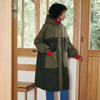
Find a hem length that suits your shape
The right short parka jacket starts with where the hem sits on you. A few centimetres can change how it works with your trousers, whether it covers your jumper and how comfortably you can sit on the bus. Rather than choosing by the word “short” alone, look at the jacket’s measurements and compare them with an outer layer you already enjoy wearing. A waist-length style, a high-hip cut and a jacket that finishes below the hip will each give you different proportions.
At La Redoute, we recommend working through three practical checks: length, silhouette and everyday wear. Start with the coverage you need, adjust the shape around your waist and shoulders, then test whether you can move comfortably with your usual layers underneath. That gives you a useful starting point whether you are shopping for chilly commutes, dog walks or cool evenings outdoors.
Start with the hem, not the size label
Choose between waist, high-hip and lower-hip lengths
A cropped parka that ends near the waist leaves more of your trousers visible. This can work particularly well with high-waisted jeans or wide-leg trousers, because the waistband and leg shape remain easy to see. Check the overlap when you stretch upwards: if your sweater rises above your trousers, you may want a slightly longer jacket for cold mornings.
A high-hip hem gives you a little more coverage without extending far down the seat. It is a practical option for getting in and out of a car, carrying shopping or walking briskly to the station. A lower-hip short parka offers more coverage at the back, although its hem may fold when you sit. Check both the front and back length, especially if the jacket has a dipped hem.
Use these quick checks before choosing:
- Measure a favourite jacket from the base of the collar to the hem and compare it with the product measurements.
- Notice whether the hem ends at a point you want to emphasise or skim past.
- Sit down and check that the front fastening does not push up towards your chin.
- Reach forwards as though holding a steering wheel to assess shoulder and back movement.
- Try the jacket with the trouser rise you wear most often, rather than judging it over an unfamiliar outfit.
Allow for your height and torso length
The same jacket can look cropped on someone with a long torso and hip-length on someone with a shorter torso. Model photographs help you understand the overall cut, but the garment measurements are more useful for predicting where the hem will land on you. If a product page gives the model’s height, use it as a reference rather than assuming the jacket will sit identically.
When browsing outerwear for different people in your household, keep the same measurement-first approach. A men's long parka coat may provide the thigh coverage someone wants for standing on a windy platform, while a short style may suit someone who spends more of the journey seated. The useful distinction is the coverage each wearer needs, not simply the category name.
Choose a silhouette that works with your layers
Use an adjustable waist to control volume
A drawcord or adjustable waistband lets you alter how closely the parka follows your middle. Leave it looser over a thick knit, or draw it in slightly when wearing a thinner top. Adjust the waist after adding your usual layers, so the fabric does not pull across your stomach or back once you are dressed for the weather.
At La Redoute, our selection includes the MTD® Short Adjustable Waist Parka by AIGLE in cream, a women's short parka with an adjustable waistband designed to adapt to different figures. That adjustment is useful when you want some waist definition without choosing a closely fitted jacket that leaves too little room for a sweater.
Check where the adjustment sits on your body. A waist cord positioned too high or too low for your proportions may gather the fabric somewhere you do not want extra volume. If you prefer a straight silhouette, leave the cord relaxed and check that the side seams hang without twisting.
Balance shoulder room, padding and hem width
A regular fit should still allow enough room for the layers you intend to wear. Fasten the jacket fully over a jumper, then bring your arms forwards. Pulling across the upper back, a zip that strains or sleeves that drag backwards can signal that the cut is too close. Going up a size may help, but check whether it also makes the shoulders or sleeves too large.
A padded parka adds thickness around the torso, so look at it from the side as well as the front. With wide-leg trousers, a more defined waist can stop the whole outfit from feeling loose. With straight or narrow trousers, you may prefer a roomier upper half. Neither approach requires a fitted shape: the aim is to keep the amount of fabric comfortable and deliberate.
If you are comparing a short style with a sherpa long coat, consider both bulk and coverage. A longer, thicker layer may suit a slow outdoor walk, while a shorter jacket can be easier to manage when you are repeatedly sitting down and standing up.
Match your short parka to everyday wear
Leave space for chilly commutes
Wear the short parka jacket over a sweater during chilly commutes, then check that the jumper’s hem sits where you want it. A longer knit showing below a cropped jacket creates a layered outline; a knit tucked into high-waisted trousers keeps the waistline clearer. If you carry a shoulder bag, try it over the jacket to make sure the strap does not restrict your arm movement.
Test the jacket while seated and fully fastened. This matters on buses, trains and in the car, where a stiff hem or bulky pocket can press into your lap. Keep your phone in the pocket you would normally use and check that it remains accessible without opening the whole jacket.
Check weather protection before a drizzly walk
Zip up the collar of a hooded parka before walking the dog through drizzle, then adjust the hood so you can still see clearly to either side. A high collar should cover the neck without rubbing under your chin. If the design has fur trim, check the material description and whether the trim is removable; it may affect how the hood sits around your face and how you clean it.
Water-resistant and waterproof are different claims. A water-resistant finish may cope with light showers, while a waterproof jacket should have a stated level of protection supported by its construction. Read the product details for information about seams, fastening covers and fabric performance. Do not assume that a cotton outer or a substantial-looking hood will keep water out during prolonged rain.
Plan for cool evenings and changing outfits
Pack the cropped parka for cool evenings at outdoor cafés, leaving enough room in your bag to avoid forcing the zip or crushing structured details. Before buying for this purpose, check the jacket’s weight and whether it packs down easily. A heavily padded style may be useful in colder weather but less convenient to carry all afternoon.
Colour can help you decide which jacket you will reach for most often. A pink parka coat can work with navy trousers and a grey sweater if you prefer colour in your outer layer. A women's khaki parka coat offers another option alongside blue denim, black trousers or cream knitwear. Compare each shade with clothes you already own rather than choosing it only from the product photograph.
Make a practical comparison before buying online
When shopping online, compare jackets using the same checklist: back length, chest measurement, sleeve length, hood adjustment and pocket position. Read the size guide for each brand rather than assuming your usual size will fit every cut. Check whether measurements refer to your body or the garment, as these figures serve different purposes.
Compare price alongside the details you will use. Adjustable cuffs may matter on a windy commute; accessible zipped pockets may be more useful when walking the dog. Check delivery information before ordering for a particular trip, and read the returns conditions so you know how to handle a fit that does not work.
If you are also browsing women's winter parka coats, compare warmth and coverage separately. A short padded jacket may insulate the torso while leaving the upper legs exposed. A longline cut covers more of your outfit, but its extra length may be less convenient for frequent seated journeys. Choose between short parkas and longer coats according to the part of your day that needs the most protection.
Your guide to parka length and flattering fit
How long should a parka jacket be?
A parka jacket should be long enough for the coverage you need while allowing you to walk, sit and reach comfortably. For a short style, that usually means choosing a hem somewhere between the waist and below the hip. There is no single correct point for everyone: your torso length, usual trouser rise and daily routine all affect where the jacket should finish.
For commuting, a high-hip or lower-hip hem can give useful overlap with your trousers without leaving much fabric beneath you when seated. For extended time outdoors in cold weather, a longer coat may be more suitable because it covers the seat and upper legs. Use these checks to narrow your choice:
- Lift your arms and check that your lower back remains covered.
- Sit down with the zip closed and assess pressure around the hips.
- Walk up a step to check that the hem does not restrict your stride.
Avoid relying on “short” or “long” in the product name alone. For example, if you want a jacket for a train commute, measure your current comfortable outer layer and compare its back length with the new parka. That gives you a more dependable reference than judging length from a photograph.
Are short jackets flattering?
Short jackets can be flattering when the hem position and volume give you the outline you enjoy wearing. A waist-length jacket can make more of a high-waisted trouser leg visible, while a high-hip style provides a little more coverage without hiding the whole shape of your outfit. The useful question is not whether short jackets suit a particular body type, but where you prefer the fabric to finish on your own frame.
Compare the jacket with your whole outfit, including shoes, rather than assessing it only from the shoulders upwards. Try these adjustments:
- Draw in an adjustable waist slightly if you want more definition over a fine knit.
- Leave the waist relaxed if you prefer a straighter outline or need space for thicker layers.
- Try a different hem length if the jacket ends at a point you would rather skim over.
Avoid sizing down simply to create a closer silhouette: pulling at the zip and restricted shoulders can make the jacket uncomfortable. For a practical example, try a high-hip parka with high-waisted straight jeans, then compare it with wide-leg trousers. Keep the version that gives you comfortable movement and the proportions you prefer from the front, side and back.