Check your duvet size first
Before you choose a purple single duvet cover, check the size printed on your duvet label. A single bed and a single duvet do not have the same dimensions, and the cover needs to fit the duvet rather than the mattress. In the UK, a standard single duvet usually measures 135 × 200 cm. Matching those measurements helps the filling reach the corners, so you are less likely to find an empty strip of fabric beside your feet at bedtime.
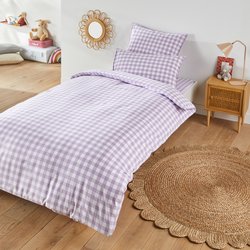
Once you have confirmed the fit, think about fabric, washing and shade. A pale lilac cover can sit alongside white furniture, while a deeper purple works with charcoal cushions or a grey quilt. At La Redoute, we suggest checking these practical details together: your bedding should suit the way you sleep, the time you have for laundry and the colours already in your bedroom.
Get the fit right for your single bed
Match the cover to the duvet, not the mattress
A standard UK single mattress is usually 90 × 190 cm, but buying a cover in those dimensions would leave insufficient space for a standard single duvet. Look for the duvet cover measurements in the product description, including its width and length. If your duvet label has faded, lay the duvet flat and measure it from edge to edge without stretching it.
Check both measurements before ordering, especially if you bought your duvet outside the UK. Some European single duvets measure 140 × 200 cm, while other sizes vary by country and retailer. A few extra centimetres can leave loose fabric along one side; a cover that is too small can make the filling bunch up.
- Read the existing duvet label or measure the duvet flat.
- Compare those measurements with the cover's listed dimensions.
- Check whether the listing is for one cover or a bedding set.
- Confirm how many pillowcases are included and note their measurements.
- Look at the fastening type if you prefer buttons, poppers or a zip.
For a quick bedtime change, turn the cover inside out, reach into its top corners and hold the matching duvet corners. Shake the cover down over the filling, then check the lower corners before fastening it. Slip the purple single duvet cover over your single-bed duvet before bedtime, and spread it across the bed to check that the filling lies evenly.
Choose a fabric that suits your routine
Cotton for everyday bedding
Cotton is worth considering if you want a washable fabric that absorbs moisture during sleep. The weave and finish affect how it feels: cotton percale generally has a crisp feel, while brushed cotton has a softer, slightly fuzzy surface. Read the composition rather than judging by photographs alone, because two purple covers can look similar online but feel different against your skin.
If you often feel warm at night, compare a lightweight cotton cover with the weight of your existing duvet. Changing the cover alone will not compensate for a filling that is too warm for the season. For cooler nights, you can add a quilt across the lower half of the bed and fold it away when you do not need it.
Muslin, blends and fabric texture
At La Redoute, our Kumla Plain 100% Cotton Muslin Duvet Cover by LA REDOUTE INTERIEURS comes in contemporary colours, with cotton gauze that gives the bedroom a cosy, warm feel. Its softly crinkled appearance is useful if you prefer a relaxed finish rather than a sharply pressed bed; check the individual listing for available colours and single-size options.
A cotton blend may suit a busy laundry routine, but drying and ironing requirements depend on its composition. Read the care label before choosing your fabric, particularly if you rely on tumble drying or have limited space for air-drying. If you already like the feel of a cover you already own, use its composition label as a reference when comparing another design, rather than assuming that every cover from the same brand uses the same fabric.
Make purple work with your bedroom colours
Choose between lilac, lavender and deeper purple
Start with the surfaces you are keeping: walls, flooring, furniture and drapes. Lilac bedding can work alongside pale grey walls and white bedside storage without introducing a large dark area. A plum or aubergine shade creates a stronger contrast against cream walls, so it can be useful when you want the bed to be the main coloured feature in a small room.
Pair the purple single duvet cover with matching lavender bedroom accents, such as a cushion and a bedside lampshade. Keep larger items neutral if you want to change the bedding colour later without replacing the curtains. You do not need every accessory to match exactly: repeating one shade in two or three places gives the room a clear colour connection.
Use pattern where it has a purpose
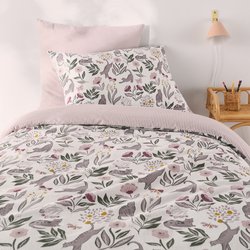
A floral cover can bring together colours already present in a rug or curtain pattern. Check close-up photographs to see whether the background is white, cream or purple, as that background will affect how light the bed looks. For a child who dreams of a space-themed room, plain dark purple bedding can sit beneath star-patterned cushions without competing with them.
A reversible design gives you two visible finishes from one cover. Fold back the top edge to show the reverse, or turn the whole cover over when you want a different pattern facing upwards. If you are comparing purple with a red single duvet cover, place each option beside the same wall colour and accessories to make the comparison easier.
Plan for washing and weekly changes
Build duvet cover care into your week
After a week of everyday use, wash the purple single duvet cover according to its care label. You may need to wash it sooner after illness, heavy perspiration or a spill. Remove the duvet completely, check for marks and fasten the cover before washing if the care instructions recommend it. Wash with similar colours, especially during the first few washes.
Use the labelled wash temperature and drying method rather than assuming that all cotton bedding needs the same treatment. Avoid overfilling the drum: the fabric needs room to move and rinse. If you air-dry the cover, spread it out rather than leaving it folded over several layers, and make sure it is fully dry before putting it away.
Keeping a spare set means you can remake the bed while the first cover dries. Store the clean cover with its matching pillowcase so you can find both during an evening change. If the set includes more than one pillowcase, check that you have enough pillows and storage space to use them rather than buying extra pieces unnecessarily.
Compare the contents as well as the price
When you shop, compare like with like. A lower price may refer to a cover alone, while another listing includes a pillowcase. Check the fabric composition, dimensions and set contents before deciding which option meets your needs. Product photographs may show cushions, a quilt or additional pillowcases that are sold separately.
If you are updating several bedrooms, keep each bed's measurements in a separate note. A teal double duvet cover for another room will not fit your single duvet, and neither will a green king size duvet cover. Comparing colours across rooms can help you coordinate a shared landing, but size should remain the first filter for each purchase.
The same check applies when buying seasonal bedding. Keep searches for Christmas bedding king size separate from your single-bed measurements, and check the dimensions of a Christmas double duvet listing rather than relying on its photograph. Record the size beside each bedroom name to reduce the chance of ordering the right design in the wrong fit.
Single duvet dimensions explained
What is the cm of a single duvet?
A standard UK single duvet usually measures 135 cm wide by 200 cm long. A single duvet cover should match those dimensions unless the manufacturer specifies otherwise. The measurement refers to the duvet itself, not the bed: a standard UK single mattress is usually 90 × 190 cm, leaving the wider duvet to hang over the sides. Sizes can differ between countries, so the word “single” alone is not enough to confirm compatibility.
- Check the duvet's sewn-in label for its dimensions in centimetres.
- If there is no readable label, measure the duvet flat across its width and along its length.
- Compare both figures with the cover's product description before buying.
A common pitfall is choosing a 140 × 200 cm cover for a 135 × 200 cm duvet without noticing the difference. It may be usable, but the additional width can leave spare fabric at the side. Equally, squeezing a larger duvet into a smaller cover can create folds and uneven thickness. For example, if your guest-room duvet measures 135 × 200 cm, select a purple cover with those same stated dimensions, then check the pillowcase size separately. That simple measurement check makes changing the bed easier and helps the filling stay evenly spread overnight.