A small daily footprint with room for dinner
A console beside the wall can hold your keys, a lamp and the post without taking over your living space. An extendable version adds another role: pull it out, fit or unfold the extensions, and make room for a meal. For a flat without a separate dining room, or a kitchen where a permanent table would block the walkway, this gives you dining space when you need it rather than all day.
The most useful compact dining solution is one that fits your routine as well as your room. Before you choose, work through four points in order: the closed size, the fully extended footprint, the seating arrangement and the opening mechanism. At La Redoute, we suggest starting with your tape measure rather than the advertised number of seats, because chairs, doorways and everyday movement all need space too.
Start with the console’s everyday position
Measure the closed footprint, including what surrounds it
Choose where the console will stand during a regular working week. This might be against a living room wall, behind a sofa or beside the kitchen entrance. Measure the available width and depth, then check nearby obstacles: a skirting board can prevent the table from sitting flush, while a radiator or projecting window ledge can affect its position.
Mark the closed footprint on the floor with removable tape, testing the tape first on an inconspicuous area. Leave it in place while you carry shopping through the room, open cupboards and move between the sofa and kitchen. If you repeatedly step around the outline, look for a shallower console or a different position.
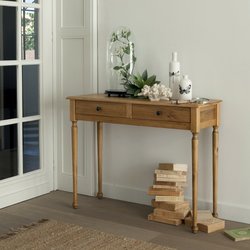
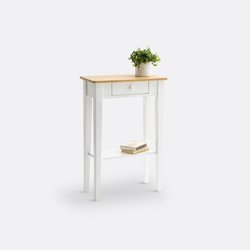
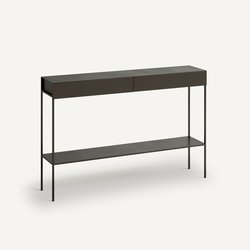
Storage also affects the decision. A white console table with drawers may suit an entrance where you need somewhere for keys and charging cables, but drawers do not necessarily mean the table extends. Check the product description for both functions rather than assuming a similar-looking design will work for dining.
Check height as carefully as width
A narrow console is not automatically suitable for eating at. Compare its overall height with the seat height of the chairs you plan to use, and check the clearance beneath the top. A drawer, rail or folded mechanism can reduce knee room even when the tabletop appears to sit at a familiar dining height.
If possible, measure a dining table that you already find comfortable. Record its height and the distance between the chair seat and the underside of the top. Those measurements give you a practical reference when comparing product specifications online.
Plan the full extension before choosing your table
Allow for chairs, movement and opening space
The closed and extended dimensions should both appear on your buying checklist. The first tells you how the console fits every day; the second tells you whether everyone can eat comfortably. You also need to know whether the table extends in one direction, opens outwards or requires repositioning before use.
As a starting guide, allow around 60cm of table edge per diner and roughly 75-90cm behind occupied chairs where people need to move. These are planning allowances rather than guarantees: wider chairs, armrests and a busy route through the room may require more clearance. Include pulled-out chairs in your floor plan, not just the tabletop.
- Measure the closed width, depth and height against the intended wall position.
- Mark every available extended size if the table has several configurations.
- Check the space needed to pull the sections apart or unfold the top.
- Allow room for diners to sit down without moving neighbouring furniture.
- Keep access to doors, kitchen appliances and essential walkways clear.
For example, unfold the console into a dining table for weekday family dinners, using a shorter setting if the mechanism permits it. Before serving, check that opening the fridge will not catch a chair back. A layout that works for an evening meal should still let someone fetch a drink without asking two people to stand up.
Match each configuration to a real occasion
Some extending tables offer several lengths through separate leaves; others have a single open position. Multiple extensions can be useful if your household needs four seats most evenings but more places occasionally. However, each unused leaf needs storage, and the larger configurations may require additional supports.
Extend the console when guests arrive for a larger Sunday brunch, but test the arrangement beforehand with your actual chairs. Put plates, glasses and serving dishes on the top to see how much shared space remains. A stated seating capacity does not tell you whether there is room for a large bread basket and several dishes in the middle.
Be cautious with descriptions suggesting the surface will double in size. Check the measurements to establish whether that refers to length, width or usable area. The practical result for you depends on where the legs sit and how much room each place setting needs.
Choose seating that works with the structure
Look beneath the tabletop
Leg placement can make more difference than an extra few centimetres of length. Corner legs may leave the sides relatively open, while central supports or crossbars can limit where feet and knees fit. Look at photographs of the table fully extended, not only its closed console position.
Count usable seating positions between the supports. If you intend to seat someone at each end, check the overhang and any rails underneath. For children, make sure the chosen seats are suitable for their age and use; do not rely on an unstable stool simply because it fits into a narrow gap.
Armless chairs are often easier to arrange around a compact table, but measure their full width rather than the seat alone. Folding chairs can help with occasional guests if you have a cupboard for them. Stackable chairs need sufficient storage height, so check that before ordering a complete set.
Keep daily storage straightforward
A console that expands for dining is most convenient when preparing it does not involve clearing a crowded surface. Keep everyday items on a tray that you can move to a shelf before dinner. Place the lamp where its cable can be disconnected safely without reaching behind heavy furniture.
When comparing Edité console tables, check the specifications for extension capability, leaf storage and clearance beneath the top. A collection name or photograph alone will not confirm whether a particular console can serve as a dining table.
Understand the mechanism before you buy
Check how the console opens and locks
Opening systems vary. A folding top may swing open on hinges, while a sliding frame may separate to accept additional leaves. Some models store extensions within the structure; others require you to keep them elsewhere. Read the instructions available for the individual product so you know what each stage involves.
Consider who will usually open the table. If you often prepare dinner alone, check whether the instructions call for two people. Also establish whether the console must be lifted, moved away from the wall or supported while extending. A mechanism that suits occasional holiday meals may feel less convenient if you need to operate it every evening.
Use every specified lock, support and fastening before seating anyone. Never assume that a level-looking surface means the mechanism is secured. Keep fingers clear of hinges and sliding joints, and keep children away while you open or close the table.
Plan where separate extensions will live
Measure loose leaves as carefully as the console itself. A hallway cupboard may be deep enough for cleaning equipment but too narrow for a tabletop panel. Follow the manufacturer’s storage guidance, using suitable protection to avoid scratches and keeping any fittings together so they are ready for the next meal.
If you plan to keep the console slim daily, then expand it for holiday meals, practise the full setup before the occasion. Check the extension sequence, find the extra chairs and identify where the console’s decorative items will go. This prevents your guests arriving while you search for a missing support.
Select a finish for meals as well as daily use
Balance appearance with practical care
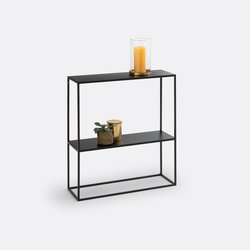
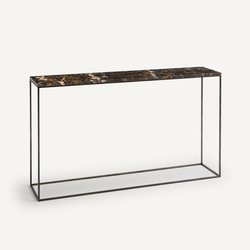
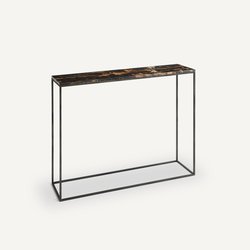
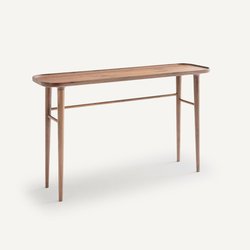
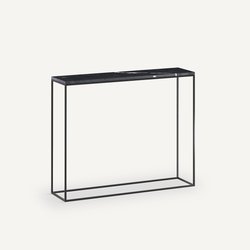
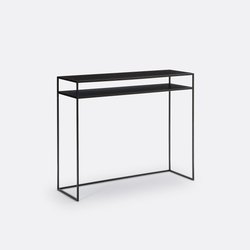
A walnut console table can work alongside darker shelving or an existing wood dining cabinet. Check whether the specification describes solid wood, veneer or a wood-effect surface, since these materials can require different care. Similarly, a black metal console table may have a glass, wood or coated top, each with its own cleaning instructions.
For a modern room, compare the table’s finish with the furniture that will remain beside it when open. This is especially useful in an open-plan living area, where the console may sit near a sofa during the day and beside kitchen cabinets at dinner.
At La Redoute, our catalogue includes the Diletta Console Table, L140cm, in oak, designed by Emmanuel Gallina exclusively for AM.PM under EMMANUEL GALLINA X AM.PM. Use its stated length as a comparison point when planning a console position, but check each product’s specification separately for extendability and dining suitability.
Build simple care into your routine
Follow the care instructions for the specific finish, particularly around moisture, heat and cleaning products. Use suitable placemats and heat protection for meals, wipe up spills promptly, and avoid letting liquid collect around extension joints. A cloth that is too wet can leave moisture in seams even after the main surface appears dry.
Before closing the table, remove crumbs from the joints and check that no table linen is caught in the mechanism. Inspect fixings at the intervals recommended in the instructions. If the table begins to wobble, stop using it until you have checked the cause rather than trying to disguise the movement with a folded napkin under one leg.
Check price, stock and delivery against the full setup
The purchase price is only part of your dining arrangement. Add any chairs, protective pads, extension storage and delivery charges when comparing options. A lower-priced console may be less suitable for you if it needs separate storage that your home cannot accommodate.
When browsing So'home console tables, compare the product details for the exact model and finish you intend to order. Stock availability, dimensions and delivery arrangements should be checked on that listing rather than inferred from another table in the range.
Measure the delivery route as well as the room. Check door openings, stairs, lift dimensions and tight corners against the packaged dimensions where provided. Confirm whether assembly is required, what the delivery service includes and whether you need another adult available to help with setup.
Choose your extendable console table around the way you will actually use it: a slim surface during the day, a comfortable family table in the evening and extra places for planned gatherings. When the closed footprint, extensions, chairs and mechanism all fit your room, switching from console to dining table becomes a manageable part of your routine.