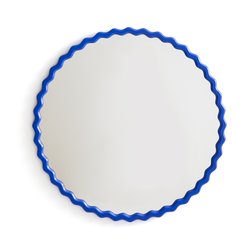
Choose the right 60cm mirror for your space
A 60cm round mirror is one of the easiest sizes to place in a busy home because it gives you a useful reflective surface without dominating the wall. If you are wondering whether this diameter will suit your hallway, bathroom or bedroom, the answer depends less on trends and more on exact wall measurements, furniture width and how close you will stand when using it. For a quick check before leaving the house, for example, a 60cm mirror hung above a hallway console gives you enough visibility for your face, hair and upper outfit without crowding a narrow entrance.
When you shop for a mirror, practical details matter more than broad style claims. You need to know how far it will sit above a console, whether the frame feels light or substantial, and how the shape works with the other lines in the room. A round wall mirror softens the straight edges of cupboards, drawers and shelving, which is why this format works so well in compact interiors. It can also feel less imposing than a large rectangular piece, especially in a small bathroom or a bedroom corner with limited wall space.
If you want to buy with confidence, start with the one fact that does not change: 60cm diameter means the mirror measures 60cm across at its widest point. That gives you a clear visual guide when comparing it with a vanity, dresser or console table. It also helps when you browse other formats such as bathroom mirrors or compare a larger 100cm round mirror for a bigger wall.
What does a 60cm round mirror look like on the wall?
Many shoppers find it hard to picture a 60cm mirror from numbers alone. In practical terms, it is a medium size: large enough to be useful above furniture, yet compact enough for rooms where every centimetre counts. In a hallway, it typically sits comfortably above a console between 80cm and 120cm wide. On a bedroom wall, it looks balanced above a dresser of around 100cm to 140cm. In a bathroom, it suits a single basin unit rather than a wide double vanity.
The circular shape also affects how the mirror reads in the room. A round mirror leaves visible wall space around it, which can make a narrow area feel lighter and less boxed in. If your room already has square tiles, straight shelves and angular storage, a circle creates contrast without adding clutter. This is especially useful in a small home where one object often needs to do several jobs: brighten the wall, reflect light and support daily routines.
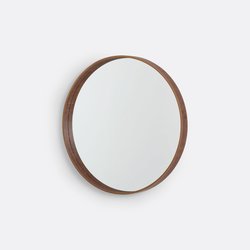
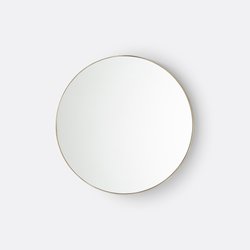
Frame thickness changes the visual weight too. A slim metal mirror in black can look crisp and modern, while a deeper wood frame feels warmer and more decorative. If you prefer texture, a round oak mirror can soften a white wall, while a white wood mirror often blends more quietly into a bright bedroom or bathroom scheme.
Where a 60cm mirror works best
A 60cm round wall mirror suits several everyday settings, but the best placement depends on what you need it to do. If the aim is practical use, think first about standing distance and eye line. If the aim is decorative impact, think about the width of the furniture below and the amount of blank wall around it.
- Above a hallway console: useful for quick outfit checks, checking your scarf, collar or hair before leaving, and adding light to a narrow entrance.
- In the bathroom: a good choice for brightening the space and reflecting natural light, especially above a single sink where a larger mirror would feel crowded.
- Over a dresser: practical for makeup touch-ups and hair styling when you stand fairly close to the glass.
In each of these settings, a 60cm diameter mirror provides enough reflective surface for everyday tasks without dominating the room. That makes it a reliable choice if you want something useful now and easy to move later if you rearrange your home.
How to place it with confidence
Good placement starts with proportion. As a rule, a round mirror should usually be narrower than the furniture below it. For a 60cm mirror, this means it looks most balanced above pieces that are at least 80cm wide. If you place it above a slim shelf only 50cm wide, the mirror can look oversized and top-heavy. If you place it above a 160cm sideboard, it may seem too small unless you style the area with wall lights or decorative objects.
Height matters just as much. In a hallway, hang the mirror so the centre sits roughly at eye level for the people who will use it most often. In practical terms, that usually means leaving around 15cm to 25cm between the top of the console and the bottom of the frame. In a bathroom, position it so the reflection works when you are standing directly at the basin, not a step back. This avoids the common mistake of hanging the mirror too high simply because the wall looks empty.
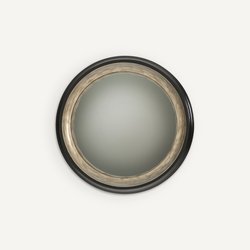
If your mirror has a bevelled edge, the glass can catch the light more subtly than a thick decorative frame. A bevelled finish is useful in a smaller room because it adds detail without increasing bulk. A black metal frame, by contrast, creates a stronger outline and can help the mirror stand out against pale paint or tiled walls.
Choosing the right material and finish
The finish you choose affects not only the style but also how the mirror sits in the room. A metal frame often feels neat and architectural, especially in black. It works well in a bathroom with taps, handles or lighting in similar tones. A wood frame can feel softer and more homely, which suits a bedroom or hallway where you want the mirror to sit naturally with furniture.
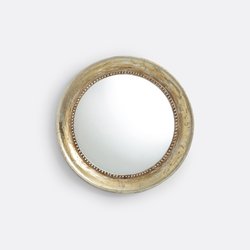
At La Redoute, our selection includes the Afsan Round Mirror, Diameter 60cm, aged gold-coloured, LA REDOUTE INTERIEURS. Product details should always be checked on the product page, including materials, finish and decorative features, before you buy. This type of round mirror can work well if you want a more decorative frame for a medium-sized wall.
When comparing finishes, ask yourself what is already present in the room:
- Do you have black handles, taps or lamp bases? A black metal frame may tie the scheme together.
- Do you have oak furniture or warm flooring? A wood mirror can feel more connected to the rest of the home.
- Do you want the mirror to stand out or blend in? A thin frame is more understated, while decorative detailing or a bevelled edge draws more attention.
Is 60cm enough for daily use?
For many homes, yes. A 60cm round mirror is large enough for face-level routines such as skincare, shaving, applying makeup and styling hair, especially when placed above a dresser or basin. It is not intended to replace a full-length mirror, so if you need to check shoes, trouser hems or a full coat, you will still want another mirror elsewhere in the home.
That said, in everyday life this format often covers the most common tasks. In a hallway, it lets you check your neckline and outerwear before heading out. In a bathroom, it reflects enough light to make the room feel brighter during morning routines. In a bedroom, it gives you a practical spot for close-up grooming without taking up floor space. This is why many customer reviews for medium round mirrors focus on convenience: they are easier to place than oversized mirrors and still feel useful from day one.
What to check before you buy
Before adding a mirror to your basket, take a few minutes to measure and compare. A well-chosen mirror is easier to hang, easier to use and less likely to be returned. When you read product information in store or online, look beyond the headline price and confirm the details that affect daily use.
- Check the full diameter, not just the style photo.
- Look at the frame depth if the wall area is narrow, such as near a door opening.
- Confirm whether wall fixings are included or sold separately.
- Read delivery information, especially if you are timing installation around a renovation.
- Use reviews to see whether customers mention weight, finish quality or colour accuracy.
It also helps to mark a 60cm circle on paper or cardboard and tape it to the wall. This simple step gives you a much clearer idea of fit than guessing from a screen. If the outline feels too compact above a wide chest of drawers, you may prefer a larger model. If it looks just right above a narrow console, you can buy with more confidence.
How a 60cm round mirror compares with other sizes
If you are deciding between sizes, think about function first. A 40cm mirror can work in a cloakroom or very tight wall space, but it may feel too small for a main bathroom or dressing area. A 60cm version offers more useful reflection while remaining easy to place. A larger 80cm or 100cm round mirror creates greater impact, but it needs more breathing room on the wall and can overpower compact furniture.
For example, above a hallway console in a flat entrance, 60cm often feels balanced because it gives enough glass for a quick check without blocking coat hooks, artwork or lighting. In a generous dining room or wide landing, a 100cm round mirror may be more suitable if the goal is decorative scale rather than close-up use. In other words, 60cm sits in the middle: practical, versatile and easy to live with.
What you need to know before buying
How to choose round mirror size?
To choose the right round mirror size, start with the wall and the furniture below it rather than the style you like most. A round mirror should usually look in proportion with what surrounds it. For a 60cm mirror, the most reliable guide is to place it above furniture that is wider than the mirror itself, such as a hallway console, a dresser or a single bathroom vanity. If the furniture is too narrow, the mirror can feel heavy and awkward; if the furniture is much wider, the mirror may look visually lost unless you build a fuller arrangement around it.
A practical way to decide is to measure three things: the width of the furniture, the free wall area above it and the distance from which you will use the mirror. If you stand close, as you would for makeup touch-ups or hair styling over a dresser, a 60cm diameter often feels very comfortable. If you want a stronger decorative effect across a broad wall, you may need a larger option. In a bathroom, think about basin width and side lighting too. A mirror that is too wide can crowd wall lights or cabinets, while one that is too small may not reflect enough light.
- Choose 60cm for medium spaces and close-up daily use.
- Keep the mirror narrower than the furniture below.
- Check the frame thickness as well as the glass diameter.
A common mistake is buying by photo alone. In a styled image, a mirror can appear bigger or smaller depending on the camera angle. Another pitfall is ignoring the frame finish: a thick wood or metal frame takes up more visual space than a slim edge. For a concrete example, if your hallway console is 90cm wide and the wall sits between a front door and a coat cupboard, a 60cm round wall mirror is often a good fit because it leaves visible space around the frame, allows for quick outfit checks and keeps the entrance from feeling cramped. That sense of proportion is what gives you confidence in the final result, not just the product price or whether the item is sold as part of a trend.