
Guide to buying a duvet
When it comes to getting a good night’s sleep, it’s all about the right environment. The perfect temperature, a comfortable mattress, good quality bedding and curtains that block out the light are all things we consider as standard… but what about your duvet?
Your duvet can make or break the quality of your sleep, so it’s important to consider the types of duvet available and which one suits you best. There’s lots to consider – from tog rating to duvet filling types – so doing your research is the best way to ensure you find your perfect match. Luckily, we’ve done the legwork for you with our duvet buying guide… so read on!
Duvet tog ratings explained
Let’s start with the duvet tog rating chart. There’s a tog rating on every duvet – these numbers tell us how warm a duvet is. The higher the tog rating, the warmer the duvet; the lower the rating, the cooler and lighter the duvet. At La Redoute, some of our duvets use the tog system and others use G/M2 measurements.Light duvets
Lighter duvets are around 3-4.5 tog or 175 G/M2 – these duvets are lightweight and cool, so perfect for those hot summer nights.
Medium duvets
7.5-10.5 tog or 420 G/M2 is a medium tog duvet – good all-rounders, these duvets are great for the in between seasons when the weather isn’t very hot or freezing cold.
Heavy duvets
Heavier duvets come in at 12-13.5 tog or 500 G/M2– they’re very warm, making them best for cold winter temperatures.
Best tog duvet for all year round
If you want the best of all worlds in one product, a 4-season duvet is a great option – made up of two separate duvets at 3-4.5 tog and 10.5 tog, they can be clipped together to create a cosy 13.5 tog winter duvet, or split apart and used separately, the lighter for summer and the medium for spring and autumn.
Our tog ratings
Whilst we're on the subject of trapping warmth, we'll explain the tog equivalent system in our duvets. In its simplest form, the system is used to identify the level of warmth that a duvet can offer. So, the higher the rating, the warmer the duvet; the lower the rating, the cooler (and usually lighter) the duvet.
175 g/m² |
420 g/m² |
500 g/m² |
4-Seasons |
|
| Equivalent tog | Equivalent to a 3 - 4.5 tog |
Equivalent to a 7.5 - 10.5 tog |
Equivalent to a 12 - 13.5 tog |
2 duvets equivalent to 3 - 4.5 tog & 7.5 - 10.5 tog. Combine to create an equivalent to 13.5 tog warm duvet |
| Perfect For: | Lightest duvet option perfect for warmer summer months | Medium weight duvet, perfect for spring and autumn time when the temperature isn't extreme in either direction. | Warmer and heavier option for cooler winter nights | The perfect 2 in 1 balance. 1 summer weight duvet and a duvet for in-between seasons. Combine these together for a cosy winter duvet. |
For more information, read our guide on staying cool in bed with our low tog summer duvets.
Which duvet size is right?
Choosing a duvet size is usually as straightforward as matching it to the size of your bed.
At La Redoute, we offer:
- Cot size duvets (75x120cm) for cots and toddler beds
- Single duvets (140x200cm)
- Double duvets (200x200cm)
- King size duvets (240x220cm)
- Super king duvets (260x240cm)
Choose one that fits your bed and the jobs done, that is unless you want to try the European method of duvet buying?
Across Europe, lots of people choose two single duvets on a double or king size bed, so each person has their own duvet and there’s no pulling the covers off your companion in the middle of the night! If you’re a sweaty sleeper or your partner is a real wriggler, this is a great way to ensure a proper night’s sleep for you both.
Duvet filling types
When considering the right duvet for you, it’s important to think about the type of filling that’s inside your duvet. There are two duvet filling types to choose from: natural or synthetic.
Natural filling
Natural filling in a duvet is made from a combination of down and feathers from either ducks or geese. Down is the soft layer of insulation that lies beneath the feathers and makes up about 80-90% of the filling in our natural duvets. Feathers, given their harder quills, make up the remaining 10-20%.
Synthetic filling
Synthetic filling in a duvet is made from polyester fibres and is designed to mimic the warmth and comfort of a natural down duvet. The fibres are woven to trap the warmth inside the duvet and provide plenty of comfort, but they usually need to be heavier to offer the same level of heat retention as natural duvets.
What duvet should I buy?
If you’ve considered the tog rating, the size and the filling but still have questions about which duvet to buy, we’ve put together some answers to our most commonly-asked duvet queries below.
| "I have an allergy" | "I want luxurious bedding" | |
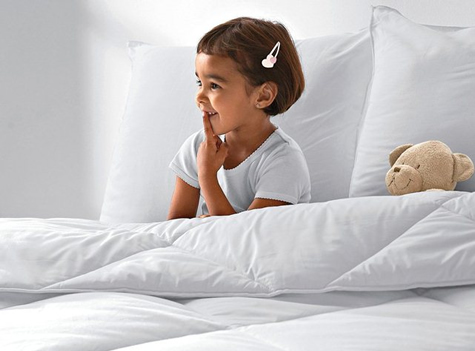
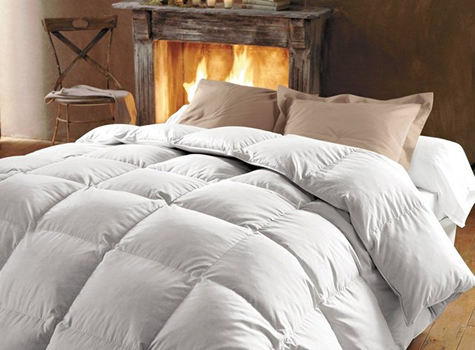
| Natural filling can often have unwanted side-effects on sleepers who suffer from allergies of things like dust mites. Synthetic and non-allergenic duvets are designed to avoid precisely that when you go to sleep at night. | Sometimes, a little extra luxury in the bedroom goes a long way to helping you sleep better at night. We offer boutique hotel style bedding that will make your bedroom look like it belongs in a palace. | |
| Your duvet of choice: La Redoute Interieurs: Duvet, Anti-Bacterial, Anti-Dust Mite, Anti-Mould, 350 |
Your duvet of choice: BEST: Natural Duvet, 320, Dust Mite Protection |
|
 |
 |
|
| SHOP NOW > | SHOP NOW > |
| "I have trouble getting warm at night" | "I have trouble staying cool at night" | |
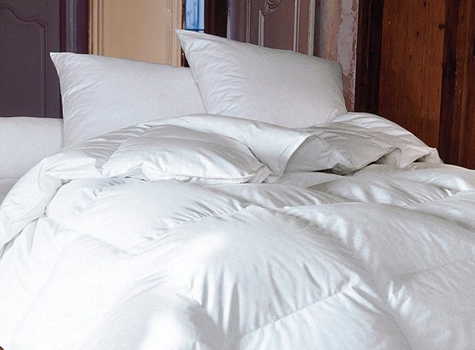
| If you're the kind of sleeper that just can't warm up in bed, no matter how many layers you have on or how high the heating is, a higher tog equivalent duvet is exactly what you need to wrap around yourself. You can even turn your heating down and save some pennies with this one. | You might be the kind of sleeper who just can't cool down at night. If you're losing sleep over it, think about getting a lighter duvet. The four-seasons option from Reverie can suit you all-year round, since you can add and remove a layer depending on the season to find your ideal temperature. | |
| Your duvet of choice: REVERIE Prestige Hollofil® Superior Quality Duvet, 500 g/m² |
Your duvet of choice: REVERIE Prestige Natural 4-Seasons Duvet |
|
 |
 |
|
| SHOP NOW > | SHOP NOW > |
| "I want my child to be warm and comfortable" | "I'm conscious of the environment" | |
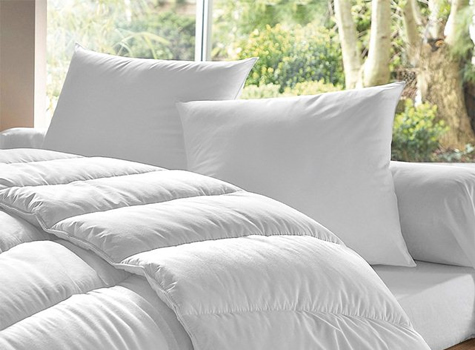
| It's advised that babies under 12 months of age should not use a duvet at all (rather a baby's sleeping bag or something similar), but toddlers to ten-year-olds will begin to need slightly higher tog equivalent duvets as the years go by. We suggest opting for a middle-of-the-road tog equivalent rating and adding a splash of colour to the bedroom whilst you're at it! | You can even do your bit for the environment whilst shopping for a duvet by opting for one of our many eco-friendly designs. This duvet from Dodo contains the first polyester fibre to meet the requirements of the European ECO Label, plus it's easy to care for and has long-lasting qualities that will leave you smiling whilst you sleep. It ticks all the boxes. | |
| Your duvet of choice: REVERIE COLOR Standard Quality Duvet, 300g/m² |
Your duvet of choice: DODO Eco-friendly Duvet with PRONEEM Treatment |
|
 |
 |
|
| SHOP NOW > | SHOP NOW > |